Laser Welding vs Soldering: Complete Guide for Jewellery Manufacturers Planning to Upgrade Their Workshop
Jewellery manufacturing has evolved significantly over the last decade. Customers today expect flawless finishing, intricate designs, stronger joints, and faster delivery timelines. As a result, manufacturers are constantly evaluating new technologies that can improve quality while reducing production challenges.
One of the most common questions workshop owners ask before upgrading their production setup is: laser welding vs soldering – which is the better choice for jewellery manufacturing?
While traditional soldering has been used for decades, modern laser welding technology offers a new level of precision, strength, and efficiency. For jewellery manufacturers working with gold, silver, platinum, titanium, and other precious metals, understanding the difference can help determine the right investment for long-term growth.
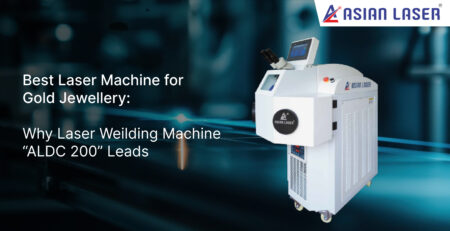
Asian Laser, with more than 30 years of experience in laser technology, has helped jewellery manufacturers across India adopt advanced laser welding solutions designed for precision and productivity. Their ALDC 200 and ALD 200 laser welding machines are specifically engineered to meet the demands of modern jewellery production.
Is Laser Welding the Same as Soldering?
No, laser welding and soldering are not the same process.
Soldering joins two metal components using a filler material that melts at a lower temperature than the base metals. The filler creates the connection between the parts.
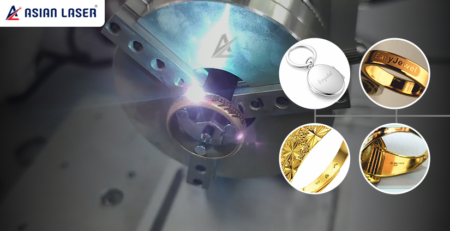
Laser welding, on the other hand, directly fuses the parent metals using concentrated laser energy. The metal itself melts and joins together, creating a stronger and cleaner bond without requiring additional filler material in most applications.
This fundamental difference impacts strength, appearance, precision, and long-term durability.
Welding vs Soldering Difference
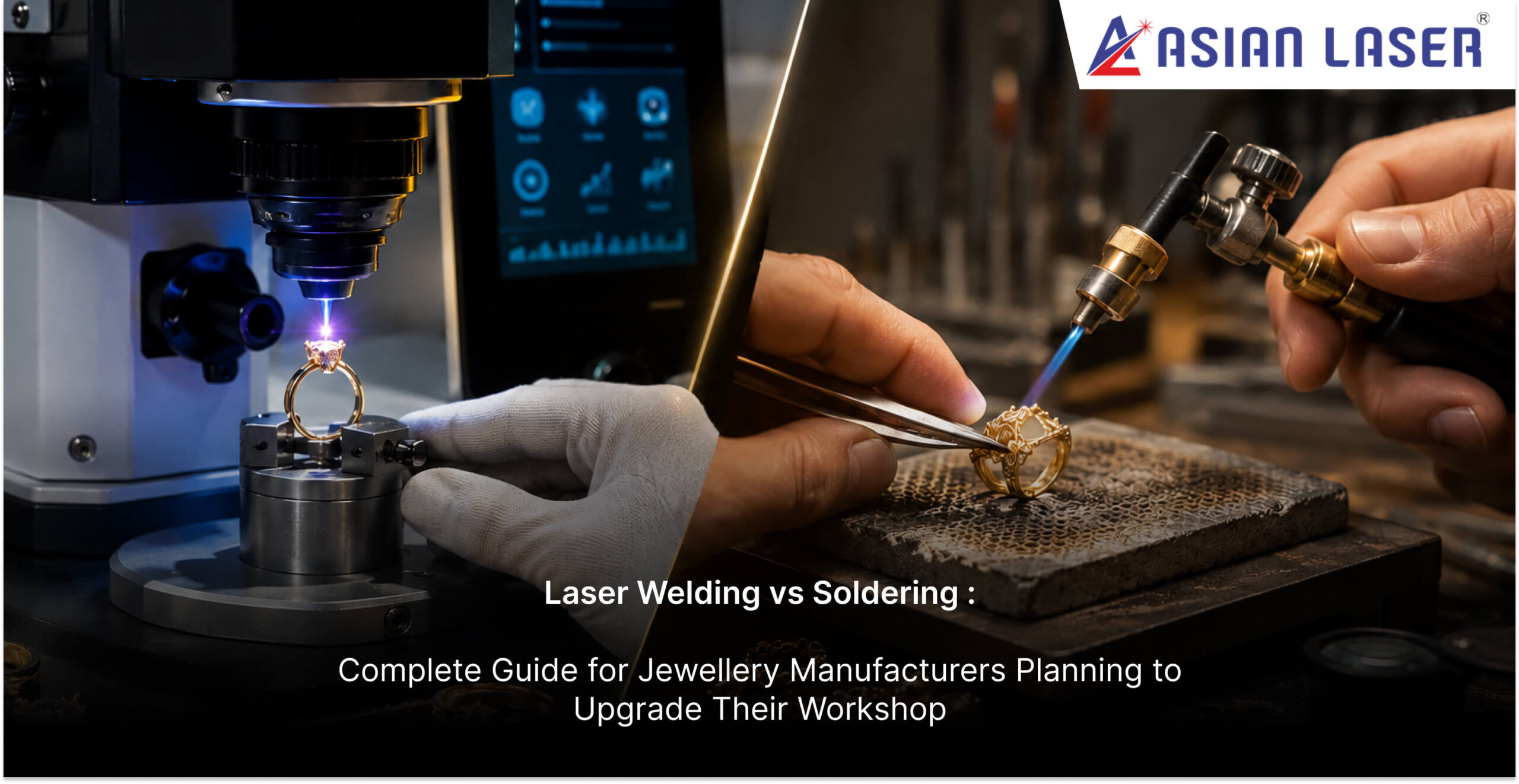
When comparing welding vs soldering differences, several factors become important for jewellery manufacturers.
| Factor | Soldering | Laser Welding |
| Joining Method | Uses filler material | Direct metal fusion |
| Precision | Moderate | Extremely high |
| Heat Impact | Larger affected area | Minimal heat-affected zone |
| Strength | Lower | Higher |
| Stone-Safe Repairs | Limited | Better control around stones |
| Finishing Required | More polishing | Minimal post-processing |
| Production Speed | Slower for complex work | Faster and more consistent |
Asian Laser’s ALDC 200 is designed to create deep and firm welds while maintaining a minimal heat-affected zone, making it suitable for delicate jewellery applications.
Laser Soldering vs Laser Welding
Many jewellers often confuse laser soldering vs laser welding because both use laser technology.
However, the results are very different.
Laser Soldering
Laser soldering still relies on a filler alloy to create the joint. The laser acts as the heat source but does not directly fuse the parent metals.
Laser Welding
Laser welding creates a direct bond between the original metals. The concentrated laser beam produces precise, strong welds while reducing distortion and preserving the surrounding material.
For jewellery manufacturers producing premium products, laser welding is generally preferred because it provides cleaner aesthetics and stronger structural integrity.
Which Is Stronger, Soldering or Welding?
Welding is significantly stronger than soldering.
In soldering, the joint strength depends largely on the filler material. Over time, these joints may weaken under stress or repeated wear.
Laser welding creates a direct fusion between metals, resulting in stronger joints that can withstand daily use and long-term wear.
This is particularly important for:
- Rings
- Chains
- Bracelets
- Bangles
- Prong repairs
- Custom jewellery assemblies
Is Welding or Soldering Better for Jewelry?
The answer depends on the application.
Soldering may still be suitable for:
- Basic repairs
- Small workshops
- Low-volume production
Laser welding is generally better for:
- High-end jewellery manufacturing
- Precision repairs
- Stone-set jewellery
- Complex assemblies
- High-volume production
Many jewellery manufacturers upgrading their workshops choose jewelry laser welding because it improves consistency, reduces rework, and enhances final product quality.
Jewelry Laser Welding vs Soldering Machine
When evaluating a jewelry laser welding vs soldering machine, manufacturers should focus on operational efficiency and long-term return on investment.
Soldering Machines
- Lower initial investment
- More operator-dependent
- Greater risk of heat damage
- Additional finishing work
Jewellery Laser Welding Machines
- Higher precision
- Faster production
- Minimal deformation
- Better aesthetics
- Stronger joints
Asian Laser’s ALDC 200 offers several advantages including:
- Less heat-affected zone
- No product deformation
- Deep and firm welding
- 24-hour continuous operation
- Capability to weld precious metals with precision
These features make it particularly suitable for growing jewellery workshops.
Jewelry Laser Welding vs Soldering Advantages and Disadvantages
Advantages of Laser Welding
Exceptional Precision
Laser energy can be focused on extremely small areas, allowing jewellers to work on intricate designs.
Minimal Heat Damage
Heat remains concentrated only where required, protecting nearby components and gemstones.
Stronger Welds
Direct metal fusion results in durable and long-lasting joints.
Cleaner Finish
Laser welds often require less polishing and finishing work.
Increased Productivity
Machines such as the ALDC 200 support continuous operation, helping manufacturers increase output.
Disadvantages of Laser Welding
Higher Initial Investment
Laser welding equipment costs more than traditional soldering systems.
Operator Training
Teams require training to maximize machine performance.
Technology Adoption
Workshops may need process adjustments when transitioning from conventional methods.
Is Laser Welding as Strong as Normal Welding?
Yes.
Modern laser welding systems can produce extremely strong welds while offering greater precision than many traditional welding methods.
For jewellery manufacturing, strength alone is not enough. Manufacturers also need:
- Precision
- Surface quality
- Minimal distortion
- Fine control
Laser welding delivers all four simultaneously, making it particularly valuable for precious metal applications.
Laser Welding vs Soldering: Which Is Better?
If your workshop primarily handles simple repairs, soldering may continue to meet your needs.
However, if your business focuses on:
- Premium jewellery manufacturing
- Complex designs
- High production volumes
- Stone-set jewellery
- Precision repairs
Laser welding is generally the better investment.
Asian Laser’s jewellery laser welding machines are designed specifically to help manufacturers achieve cleaner welds, greater efficiency, and superior product quality while supporting long-term production growth. With over 30 years of laser technology expertise and a wide range of welding solutions, Asian Laser continues to be a trusted partner for jewellery manufacturers across India.
Conclusion
The debate between laser welding vs soldering ultimately comes down to quality, precision, and scalability.
While soldering remains useful for basic applications, laser welding offers stronger joints, cleaner finishes, minimal heat impact, and greater production efficiency. For jewellery manufacturers planning to modernize their workshops and stay competitive in an increasingly quality-driven market, laser welding represents the future of jewellery production.
Choosing the right machine is equally important. Advanced solutions like Asian Laser’s ALDC 200 are specifically designed to meet the evolving needs of jewellery manufacturers seeking precision, reliability, and long-term operational excellence.
FAQs
What is the difference between laser welding and soldering?
Laser welding directly fuses the parent metals, while soldering joins metals using a filler material.
Is laser welding stronger than soldering?
Yes. Laser welding typically creates stronger and more durable joints because it directly fuses the metals.
Is laser welding suitable for gold jewellery?
Yes. Laser welding is widely used for gold, silver, platinum, titanium, and other precious metals.
What is the disadvantage of laser welding?
The primary disadvantage is the higher initial investment compared to traditional soldering equipment.
Is laser welding safe around gemstones?
Laser welding offers better heat control and a smaller heat-affected zone, making it suitable for many stone-set jewellery repairs.
Which is better for jewellery manufacturing: welding or soldering?
For precision, strength, productivity, and finishing quality, laser welding is generally the better choice.