What Are the Benefits of Using a Laser Welding Machine for Jewellery Manufacturing?
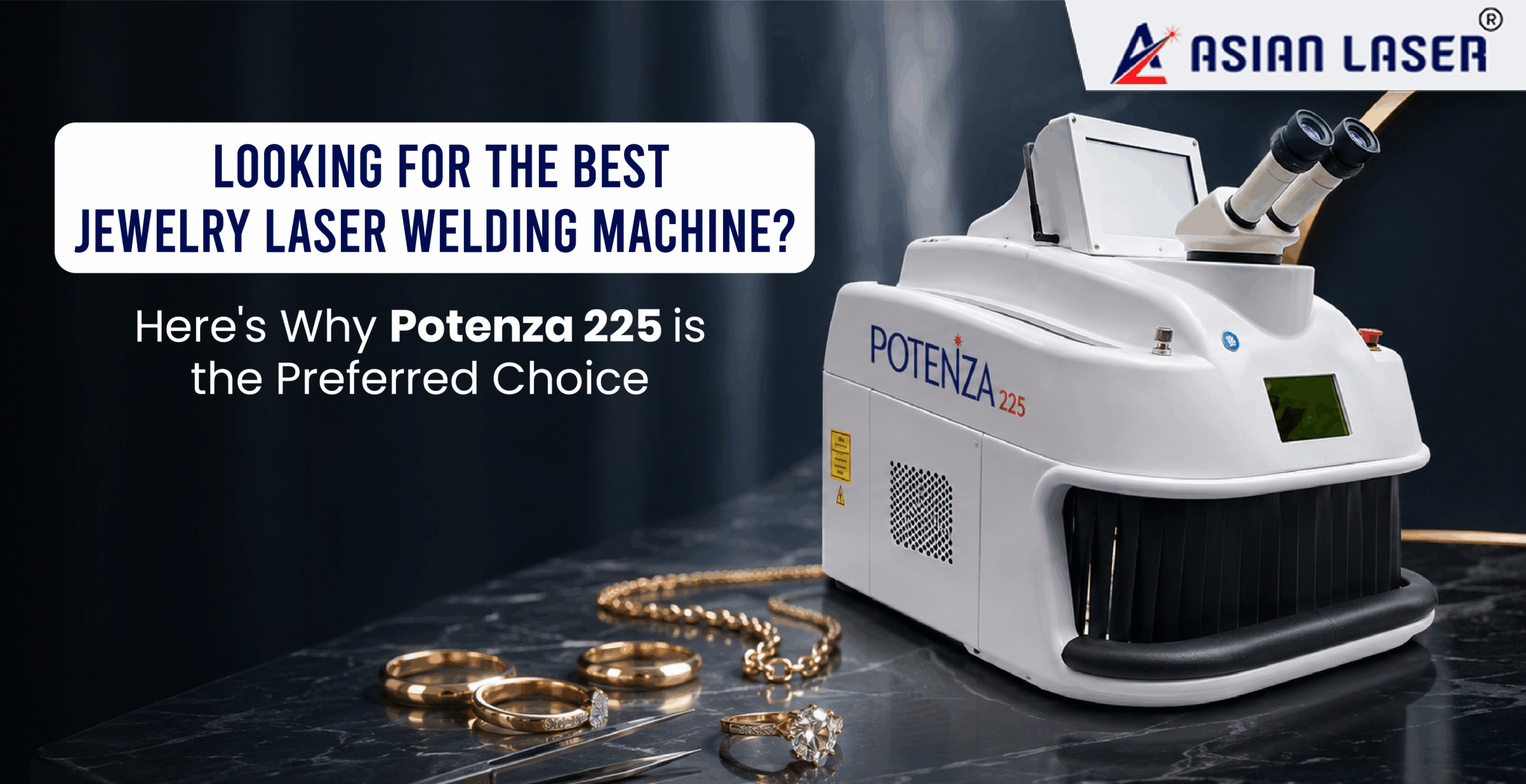
Jewellery manufacturing demands precision at every stage. A small welding error can affect the appearance, strength and value of a finished piece. This is why many jewellery manufacturers and repair professionals are moving towards advanced welding technologies that offer greater control over heat and accuracy. As jewellery manufacturing continues to demand greater precision and consistency, manufacturers are increasingly turning to advanced solutions from companies like Asian Laser for more controlled welding applications.
A laser welding machine has become an important technology for jewellery manufacturing because it enables highly precise, localised welding with minimal heat impact on surrounding areas. From repairing delicate gold jewellery to manufacturing intricate designs, laser welding can improve the quality and consistency of several jewellery production processes.
But what exactly makes laser welding suitable for jewellery? How does laser welding work, and what are the real benefits of a laser welding machine for manufacturers?
This guide explains the technology, its practical advantages, limitations and the factors jewellery businesses should consider before investing in a machine.
How Does Laser Welding Work in Jewellery Manufacturing?
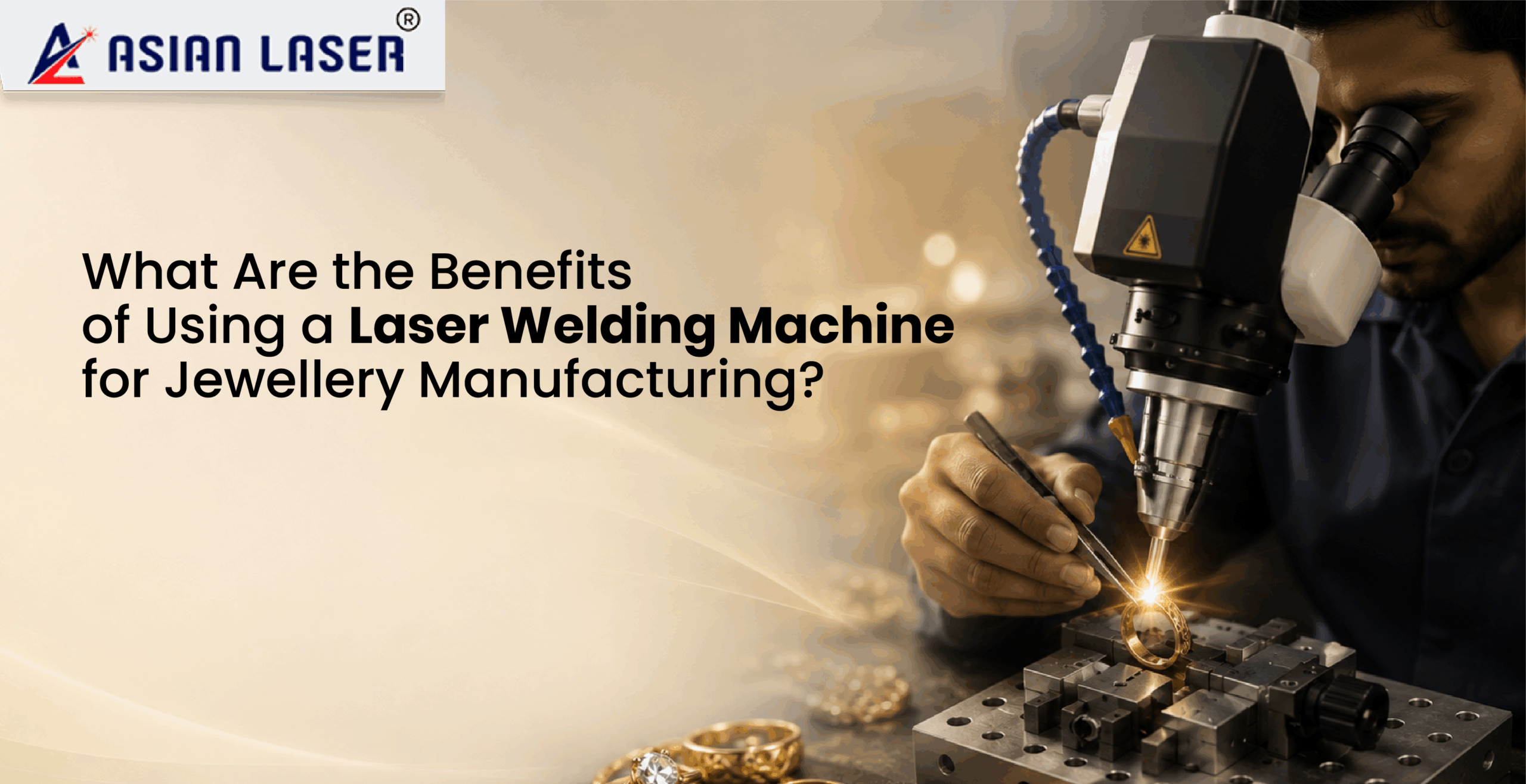
Laser welding uses a concentrated laser beam to generate heat at a specific point on a metal surface. The energy melts the targeted area or a compatible filler material, allowing two metal surfaces to join together as the weld cools and solidifies.
Unlike conventional welding methods that can distribute heat across a wider area, laser welding is highly localised. The operator can control parameters such as laser power, pulse duration, frequency and spot size based on the material and application.
In jewellery manufacturing, this precision is particularly valuable. Gold, silver and other jewellery materials often require careful handling because excessive heat can cause distortion, discolouration or damage to nearby stones and delicate sections.
The basic process is straightforward:
- The jewellery components are positioned accurately.
- The laser beam is focused on the specific welding point.
- Controlled energy melts the metal or filler material.
- The joint cools and forms a precise weld.
The result is a controlled welding process designed for detailed work where conventional methods may offer less precision.
7 Benefits of Laser Welding Machine for Jewellery Manufacturing
The technology offers several practical benefits for jewellery manufacturers. However, the exact results depend on the machine, operator skill, material and application.
1. High Precision for Intricate Jewellery Designs
One of the biggest advantages of laser welding machine technology is its precision.
Jewellery often includes fine chains, thin sections, delicate settings and intricate designs. A broad heat source can make it difficult to work on these components without affecting nearby areas.
A laser welding machine allows the operator to target a very specific point. This level of control is useful for:
- Fine jewellery components
- Delicate chains
- Intricate ornaments
- Small cracks and surface defects
- Detailed repair work
For manufacturers producing high-value or customised jewellery, greater precision can help maintain the original design and finish of the product.
2. Minimal Heat-Affected Area
Heat control is a major concern in jewellery manufacturing. Excessive heat can affect the surrounding metal and in some cases, increase the risk of damage to heat-sensitive components.
Laser welding concentrates energy on the required area. This creates a relatively small heat-affected zone compared with many traditional welding approaches.
The practical benefit is better control over the surrounding jewellery. Manufacturers can work on specific areas while reducing unnecessary heat exposure to nearby sections.
This is especially important when repairing finished jewellery or working close to delicate details.
3. Reduced Risk of Jewellery Distortion
Thin jewellery components can be sensitive to excessive heat. Uneven heating may affect the shape or alignment of a piece.
Because laser welding offers controlled energy delivery, it can help reduce the possibility of unnecessary thermal distortion when the process is properly set up.
This can be valuable in the production of:
- Thin rings
- Fine bracelets
- Lightweight ornaments
- Small jewellery components
The ability to focus the welding process on a precise location gives manufacturers greater control over the final appearance of the jewellery.
4. Cleaner and More Controlled Welds
A clean weld is important not only for strength but also for the final finishing process.
Laser welding can produce precise joints with controlled weld penetration. This can reduce the amount of additional correction required after welding, depending on the application and operator technique.
For jewellery manufacturers, cleaner welding can support a smoother workflow between welding, polishing and finishing.
It is important to understand that a laser does not automatically guarantee a perfect weld. Machine settings, material compatibility and operator experience still play a significant role. However, the technology provides the level of control needed for consistently detailed work.
5. Suitable for Repairs and Jewellery Rework
Jewellery businesses do not only manufacture new products. Repairs and rework are also important parts of the industry.
A laser welding machine can be used for several precision repair applications, such as repairing small cracks, rebuilding worn sections or working on difficult-to-access areas.
The controlled nature of laser welding can be particularly useful when the goal is to preserve as much of the original jewellery as possible.
For jewellery repair professionals, this can help expand the range of jobs they can undertake with greater precision.
6. Greater Production Consistency
Consistency becomes increasingly important as a jewellery business grows.
When multiple pieces require similar welding work, a controlled machine-based process can help maintain more consistent results. Operators can use defined welding parameters for specific applications and materials.
This does not eliminate the need for skilled technicians. Instead, the technology gives operators a more controlled tool for executing detailed welding work.
For manufacturers handling repeat production or a growing volume of jewellery orders, process consistency can support better quality control.
7. Supports Modern Jewellery Manufacturing Requirements
Jewellery designs are becoming increasingly detailed and customised. Manufacturers are expected to work with complex shapes, fine components and different material requirements.
Traditional welding methods may not be ideal for every application.
A laser welding machine gives jewellery manufacturers access to a more precise welding approach that can complement modern production processes. It can be used for manufacturing, repair and specialised jewellery applications based on the machine’s capabilities.
This flexibility is one of the key reasons laser welding technology continues to attract attention in the jewellery sector.
Advantages of Laser Welding Machine vs Traditional Welding
When comparing the advantages of laser welding machine technology with conventional welding methods, precision and heat control are two of the most important differences.
Traditional welding methods may be suitable for certain applications, but jewellery requires a different level of control. Laser welding can offer:
- More targeted heat application
- Greater control over welding parameters
- Better suitability for delicate components
- Precise welding of small areas
- Reduced need for extensive post-welding correction in suitable applications
However, the right technology depends on the jewellery manufacturer’s specific requirements. A machine should be selected based on the materials, production volume, type of jewellery and the skill level of the operator.
Disadvantages of Laser Welding Machine: What Should Manufacturers Know?
While the benefits are significant, it is equally important to understand the disadvantages of laser welding machine technology before investing.
Higher Initial Investment
Laser welding machines generally require a higher initial investment than basic conventional welding equipment. The purchase decision should therefore be based on the business’s long-term production and repair requirements.
Operator Training Is Important
Laser welding requires proper training and process understanding. The operator must know how to adjust parameters based on the material and application.
Inadequate training can affect weld quality and machine performance.
Machine Selection Matters
Not every laser welding machine is suitable for every jewellery application. Power, configuration, working area and other technical specifications need to be evaluated carefully.
A machine that is not correctly matched to the business’s requirements may not deliver the expected results.
Maintenance and Technical Support
Like any advanced manufacturing equipment, laser welding systems require proper maintenance and technical support.
This is why choosing reliable laser welding machine manufacturers in India or an authorised supplier with proper after-sales support like Asian Laser is an important part of the buying process.
How to Choose the Right Laser Welding Machine for Jewellery?
Before purchasing a laser welding machine, jewellery manufacturers should evaluate more than just the price.
Consider the Jewellery Materials
Different metals may require different welding parameters. Understand the materials your business works with most frequently before selecting a machine.
Evaluate Your Application
Are you primarily manufacturing jewellery, repairing pieces or doing both? Your application will influence the type of machine and specifications you need.
Check Precision and Control Features
For delicate jewellery work, precise control over welding parameters is essential. Look for a machine that allows operators to make adjustments according to the application.
Consider Production Requirements
A small repair workshop and a high-volume jewellery manufacturer may have completely different equipment requirements.
Assess your expected workload, production volume and future expansion plans.
Compare Technical Support
Technical support, training and service availability should be considered when comparing laser welding machine manufacturers in India.
A supplier’s support after the purchase can have a direct impact on machine utilisation and long-term productivity.
Is a Laser Welding Machine Worth It for Jewellery Manufacturing?
For jewellery manufacturers and repair professionals who regularly handle precision welding work, a laser welding machine can be a valuable investment.
The key benefits include greater precision, controlled heat application, reduced risk of distortion and suitability for delicate jewellery applications. These advantages can support better quality and a more controlled production process.
However, the investment should be evaluated based on actual business requirements. The machine, welding application and operator expertise must work together to achieve the desired results.
In simple terms, a laser welding machine is worth considering when precision and heat control are critical to the quality of your jewellery work.
Final Thoughts
Jewellery manufacturing is a precision-driven industry where even a small welding error can affect the final product. A jewellery laser welding machine gives manufacturers greater control over the welding process and can be used for delicate, detailed and specialised jewellery applications.
From precision and heat control to improved consistency, the technology offers several practical benefits. At the same time, businesses should carefully evaluate the investment, operator requirements and machine specifications before making a decision.
For jewellery manufacturers focused on quality and precision, laser welding is not simply a new welding method. It is a technology that can support more controlled and modern jewellery manufacturing processes.
Frequently Asked Questions
What are the main benefits of a laser welding machine for jewellery?
The main benefits include high precision, controlled heat application, a smaller heat-affected area, cleaner welds and suitability for delicate jewellery manufacturing and repair applications.
How does laser welding work?
Laser welding uses a concentrated laser beam to apply controlled heat to a specific area of precious metal. The targeted metal or filler material melts and forms a joint as it cools and solidifies.
Is laser welding better than traditional welding for jewellery?
Laser welding can be better suited to jewellery applications that require high precision and controlled heat. However, the right welding method depends on the material, application and production requirements.
What are the disadvantages of laser welding machines?
The main disadvantages include higher initial investment, the need for operator training and the importance of selecting the correct machine for a specific application.
How do I choose a laser welding machine for jewellery manufacturing?
Consider the jewellery materials, type of application, production volume, machine control features, technical specifications and the supplier’s after-sales support.
Are laser welding machines suitable for jewellery repair?
Yes. Their precision and controlled heat application make them suitable for several jewellery repair and rework applications, depending on the machine and the specific job.
What should I look for in laser welding machine manufacturers in India?
Look for technical expertise, machine suitability, training, after-sales support, service availability and a clear understanding of jewellery manufacturing requirements.