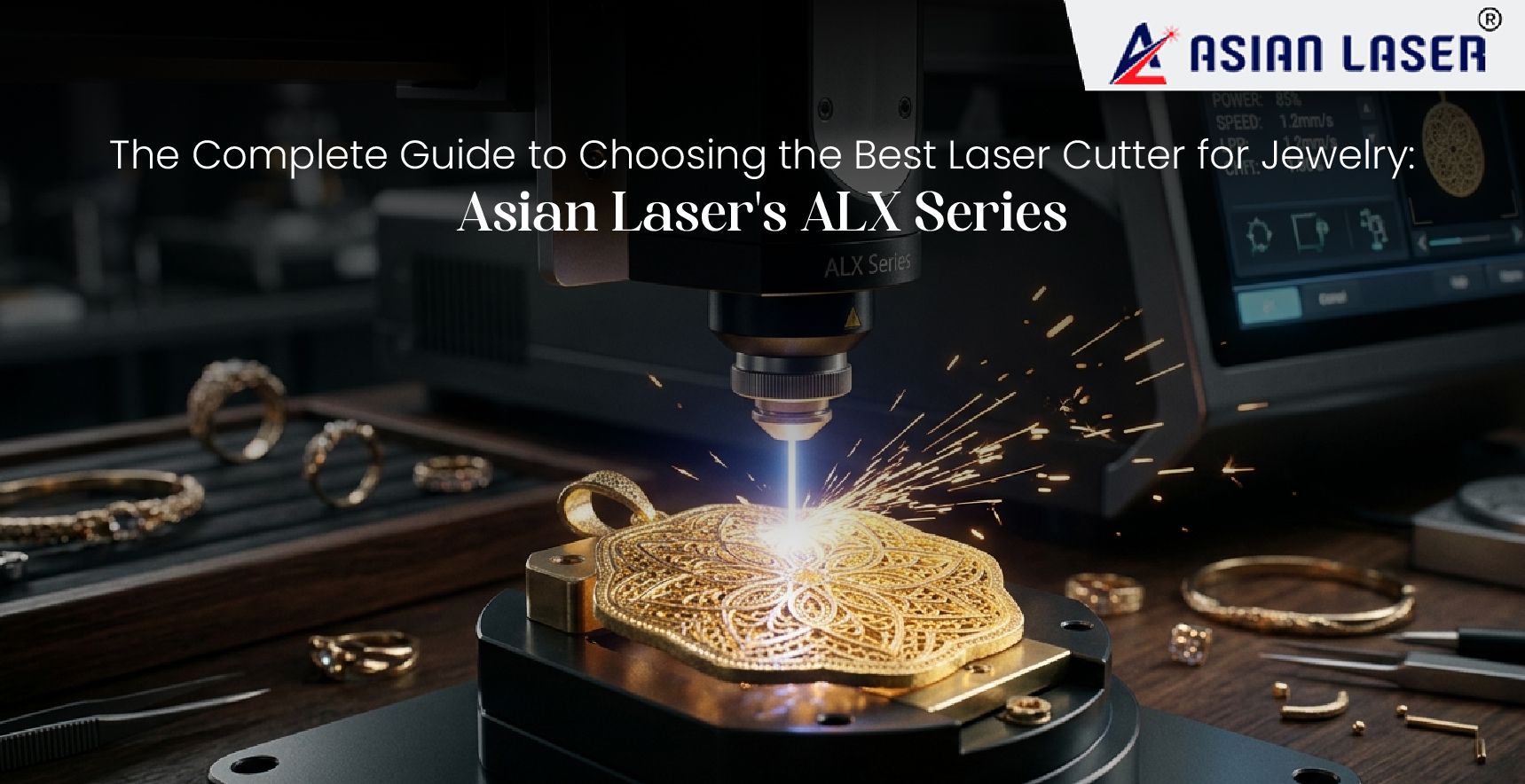
The Complete Guide to Choosing the Best Laser Cutter for Jewelry: Asian Laser’s ALX Series
Precision defines modern jewellery manufacturing. From micro-level engraving to intricate metal cutting, selecting the right laser cutter for jewelry is no longer optional, it directly impacts production efficiency, finish quality and scalability.
This guide breaks down the technical, operational and commercial factors that matter when choosing a Jewellery Laser Cutting Machine, with a focused look at how the ALX Series by Asian Laser aligns with industry requirements.
Why Laser Cutting for Jewelry Is Transforming Manufacturing
Traditional methods struggle with consistency, especially when working with delicate patterns or precious metals. Laser cutting for jewelry eliminates these limitations by offering:
- Micron-level precision
- Clean edges with minimal post-processing
- High repeatability for bulk production
- Reduced material wastage
For manufacturers and designers, this translates into faster turnaround times and superior finish quality.
Laser Cutter for Jewelry Making: What You Must Evaluate
Choosing the right system requires more than comparing specifications. Focus on these critical parameters:
1. Material Compatibility
A high-performance laser cutter for metal jewelry must support:
- Gold
- Silver
- Platinum
- Brass and copper alloys
The ALX Series is engineered to handle reflective and delicate metals with controlled heat input.
2. Precision & Beam Stability
Jewellery demands extremely fine detailing. Look for:
- Stable beam quality
- Minimal heat-affected zone
- Consistent edge sharpness
This is especially important for laser cutting for jewelry making, where design complexity is increasing.
3. Speed vs Accuracy Balance
Industrial jewellery units need both:
- High-speed production
- Zero compromise on detail
Machines that over-prioritize speed often degrade finish quality, something the ALX Series is designed to avoid.
4. Automation & Integration
Modern systems should support:
- CAD-based design integration
- Batch processing
- API-enabled workflows
Asian Laser’s systems are built for scalable operations, making them suitable for both SMEs and large manufacturers.
Laser Engraver for Jewelry vs Laser Cutter: Key Difference
While often used interchangeably, there’s a clear distinction:
| Function | Laser Cutter | Laser Engraver |
| Purpose | Cuts metal sheets | Marks surface |
| Depth | Full penetration | Surface-level |
| Use Case | Shape creation | Branding, detailing |
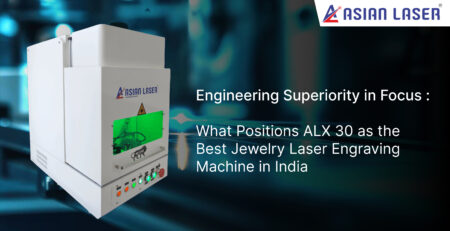
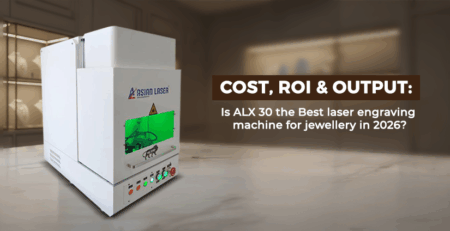
A combined laser engraver for jewelry making and cutting systems, like the ALX Series provides operational flexibility.
Best Laser Cutter for Jewelry: What Sets ALX Series Apart
Based on industry requirements, the best laser cutter for jewelry must deliver:
- High precision on thin metals
- Stable performance over long production cycles
- Minimal maintenance downtime
Why ALX Series Stands Out
- Engineered for jewellery-grade accuracy
- Supports intricate design execution
- Consistent output across batch production
- Built for continuous industrial use
This makes it particularly effective for manufacturers scaling from manual to automated production.
Can a Laser Cutter Cut Gold?
Yes, modern systems are fully capable.
However, cutting gold requires:
- Controlled laser intensity
- Proper wavelength compatibility
- Precision cooling mechanisms
Machines like the ALX 30, 50, 60 & 100 are optimized to handle reflective metals like gold without compromising edge quality.
Laser Cutting for Jewelry Making: Practical Applications
A laser cutting machine in jewellery production enables:
- Custom pendant design
- Intricate filigree patterns
- Name jewellery and personalized pieces
- High-precision component manufacturing
This versatility is why laser technology is now central to jewellery production lines.
What Are the Disadvantages of Laser Cutting?
While highly efficient, laser cutting has a few considerations:
1. Initial Investment
High-quality machines require capital investment, but ROI is achieved through efficiency and reduced wastage.
2. Skilled Operation
Operators need training to optimize settings for different metals.
3. Maintenance Requirements
Regular calibration ensures consistent output quality.
However, these limitations are significantly reduced with industrial-grade systems like the ALX Series, which are designed for ease of use and durability.
Jewellery Laser Cutting Machine: Features That Matter
When evaluating options, prioritize:
- High beam precision
- Software compatibility
- Low operational downtime
- Scalability for bulk production
These are essential for businesses aiming to remain competitive in modern jewellery markets.
Laser Cutting Machine ROI for Jewellery Businesses
Investing in the right laser cutter for jewelry making directly impacts:
- Production speed (2–5x increase)
- Material savings
- Design capabilities
- Market competitiveness
For growing manufacturers, this is not just a machine purchase, it’s a strategic upgrade.
FAQs
What is the best laser cutter for jewelry?
The best system offers high precision, metal compatibility and stable performance. Industrial-grade solutions like the ALX Series are designed specifically for jewellery applications.
Can a laser cutter cut gold and silver?
Yes, advanced machines can cut both gold and silver with high precision when configured correctly.
What is the difference between laser cutting and engraving in jewelry?
Cutting shapes the metal, while engraving marks the surface for detailing or branding.
Is laser cutting suitable for small jewellery businesses?
Yes, especially with scalable systems that support both small batches and mass production.
What are the disadvantages of laser cutting?
Initial cost, training requirements, and maintenance are key considerations, but they are offset by long-term efficiency.